Discovery · Consumer UX · Product reliability
Making video discovery feel coherent across different sources.
I designed a common place to search, narrow and organize video, with explicit boundaries around what the product can actually play.
01 / The problem
Start with the work people need to do.
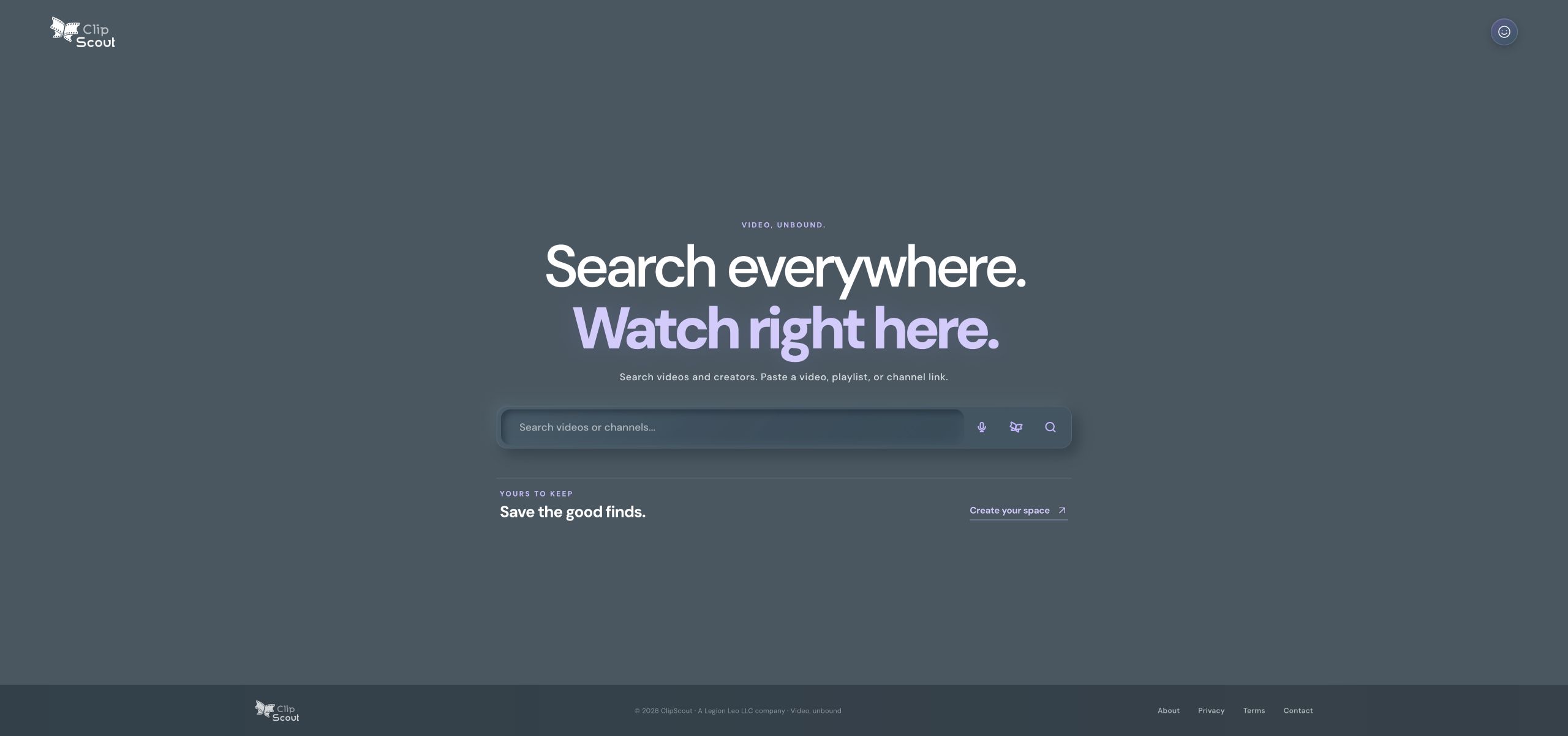
Cross-source discovery creates two challenges: inconsistent ways to search and save, and inconsistent availability. I worked on a common discovery and organization experience while treating playback availability as a separate requirement. A search result or a familiar provider name alone is not proof that a video can be played.
- 01 / Express intent onceSearch for videos or creators, or paste a video, playlist or channel link.
- 02 / Narrow the fieldUse focus, format, length and source filters; keep sorting separate.
- 03 / Keep useful findsThe product architecture separates personal playlists and tags from public editorial collections.
02 / Design decisions
The choices behind the interface.
Keep one query surface, make scope explicit
Multiverse search and ClipScout Select serve different intents. The product keeps one query field while distinguishing broad discovery from the editorial collection. Filters should refine the current result set rather than unexpectedly sending a viewer into another search.
Let available results arrive progressively
The September search work separated provider progress so a slow source did not hold back a faster source. The user-facing goal is a useful first result while bounded checks continue. This is an implementation direction, not a measured claim of faster production discovery.
Treat availability as part of the experience
A credible interface must distinguish discovering metadata from proving playback. The current policy prefers lawful, admitted, ad-free direct playback, allows only individually qualified official fallbacks, and otherwise returns unavailable. It does not promise that every listed source or video works.
03 / Evolution
How the direction became more specific.
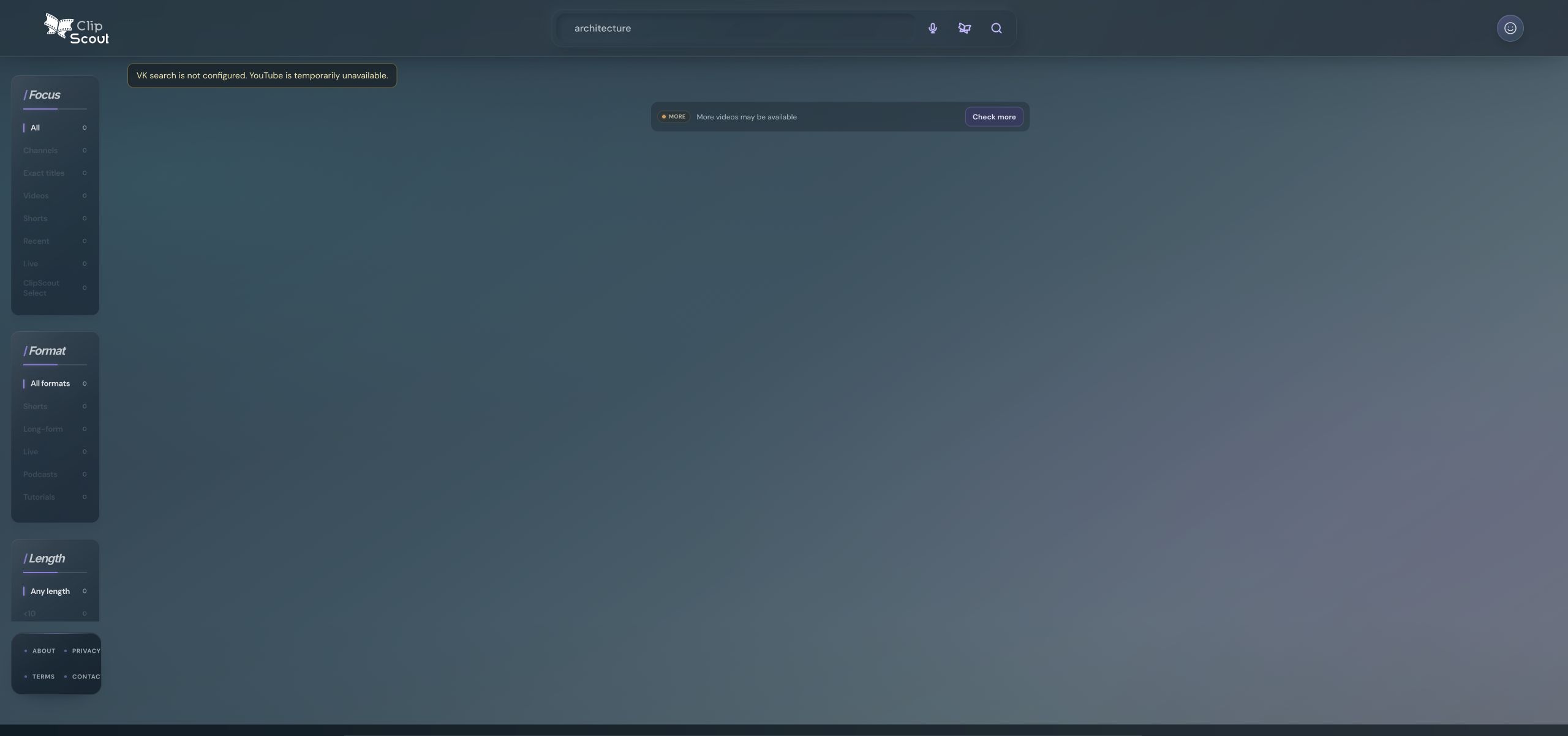
The release history records search continuity, first-class collections and later improvements to provider scheduling, responsive result density and recovery from stale validation errors. These decisions address a recurring tension: keep the interaction fluid without making availability promises the system cannot prove.
04 / Outcome
What exists, and what I would measure next.
The public search interface, filters and availability feedback are observable. The latest captured query returned no results. That means the current live experience should not carry a claim of universal or uninterrupted playback, and availability work remains necessary before making it a primary live-demo destination.
I would measure time to first usable result, searches with no usable results, successful playback after selection and return-to-saved-item success. Those measures must be segmented by source and device; aggregate counts can hide a provider-specific failure.
About this case study
Written from retained project decisions and interface evidence, reviewed October 24, 2026. The screenshots are actual captures; prototype and demonstration states are labeled. The outcomes section distinguishes current implementation from future validation.