AI workflows · Information architecture · Design systems
Turning a council of AI models into work a person can inspect.
I shaped and built a workspace for structured AI deliberation: define the work, assign participants, follow their contributions and keep the result connected to its context.
01 / The problem
Start with the work people need to do.
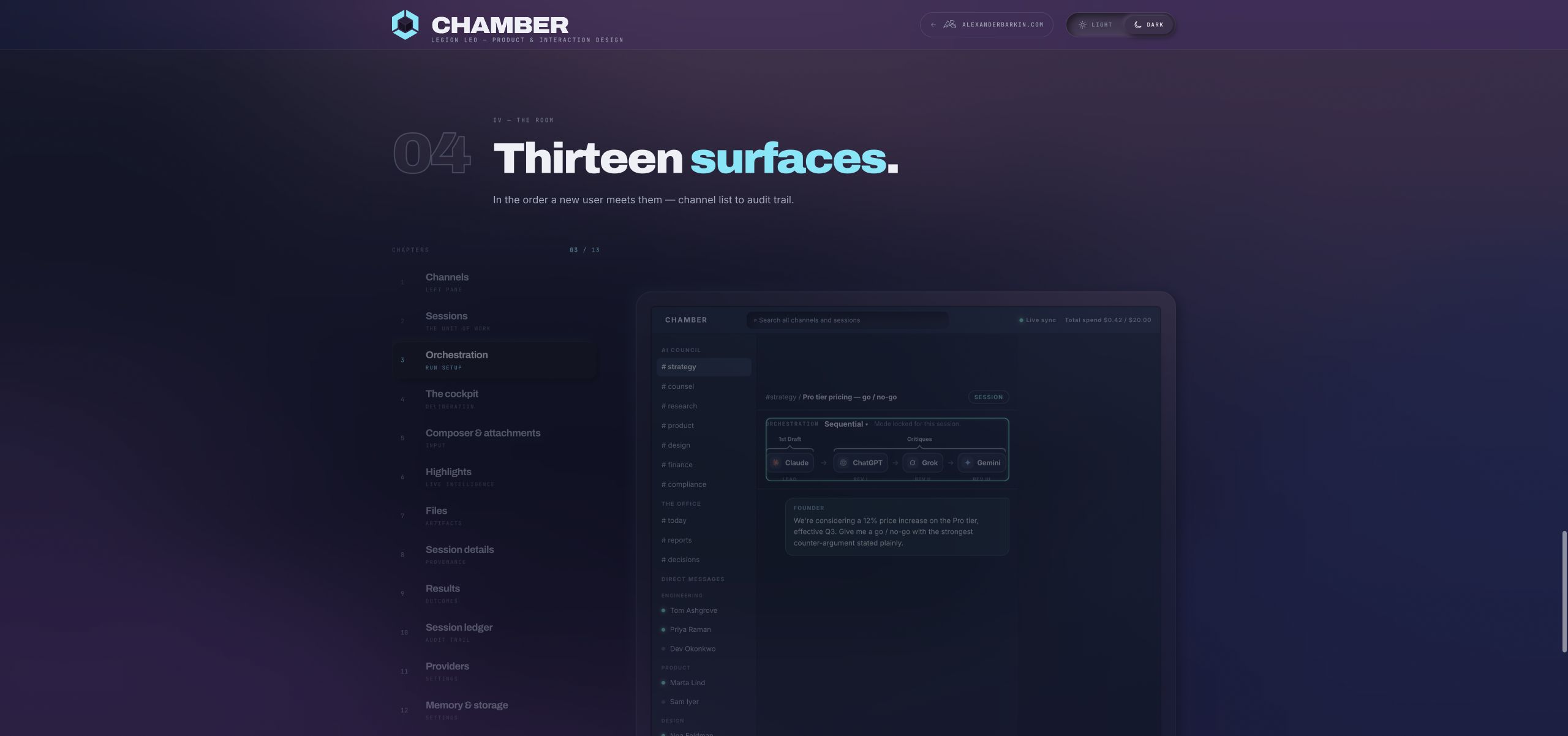
Multiple AI responses are difficult to compare when they live in disconnected chats. A useful workspace must explain who contributes, in what order, what context was available and where the result goes. My product work focused on making that structure understandable without turning every technical concept into another top-level navigation item.
- 01 / Frame the sessionA channel establishes context; a session defines a specific unit of work.
- 02 / Configure the councilChoose participants and roles, then a sequential, parallel or hybrid mode.
- 03 / Inspect and reuseFollow highlights, review session details and use the files produced by the work.
02 / Design decisions
The choices behind the interface.
Separate two kinds of work
The product architecture distinguishes AI Council deliberation from The Office’s operating communication. Both use channels and sessions, but provider and orchestration controls belong in the council. This keeps the navigation familiar while allowing the cockpit to match the task.
Put provenance beside the result
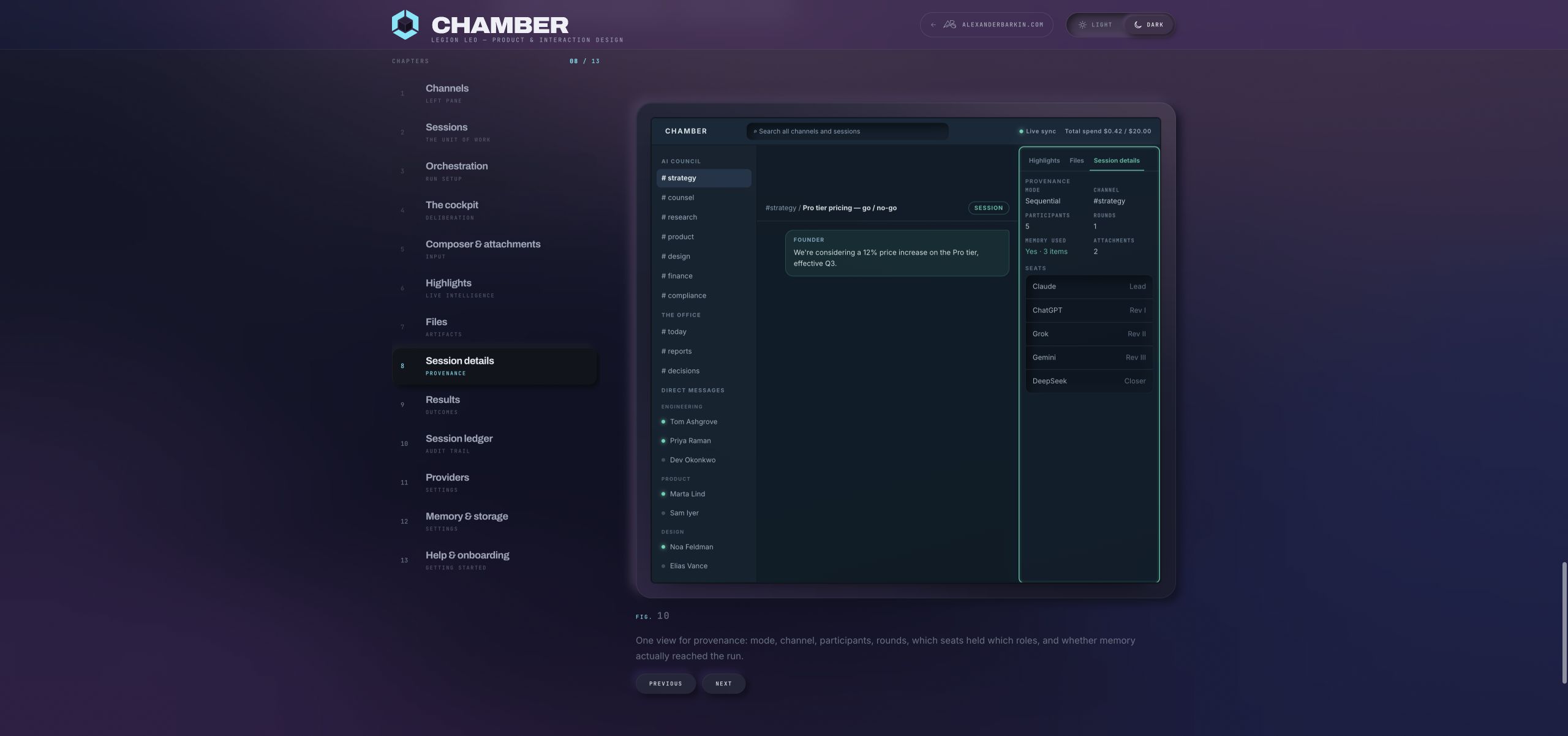
The documented direction consolidates results and their context within Session Details. Files becomes the place for usable artifacts; memory and attachments used become metadata. This reduces the need to reconstruct a session by jumping among Rounds, Decisions, Memory and Work tabs.
Make state understandable
A user-assigned status such as Draft or Complete is different from a run being interrupted and different again from a save failing. Keeping these states distinct is a product decision about trust: a reassuring label should not conceal work that has not been saved or completed.
03 / Evolution
How the direction became more specific.
The documented design evolved from a multi-agent interface toward a workspace with two operating sections. A later Session Details direction brought results, files and provenance into a more coherent view. The project roadmap distinguishes completed stabilization work from remaining work in attachments, memory, provider settings, mobile use and public-release hardening.
04 / Outcome
What exists, and what I would measure next.
The retained application and public interaction tour demonstrate the navigation and orchestration design. They do not establish that AI conclusions are correct, legally reliable or guaranteed to cover every issue. My design goal is to make the process inspectable so a person can judge the output.
I would test whether a new user can configure a council, explain who sees which context and recover the final artifact without guidance. Task completion, recovery from interrupted work and confidence in save state are more useful measures here than an unsupported claim of “airtight” reasoning.
About this case study
Written from retained project decisions and interface evidence, reviewed October 24, 2026. The screenshots are actual captures; prototype and demonstration states are labeled. The outcomes section distinguishes current implementation from future validation.