Commerce · Product strategy · Interaction design
Helping independent sellers make their business the destination.
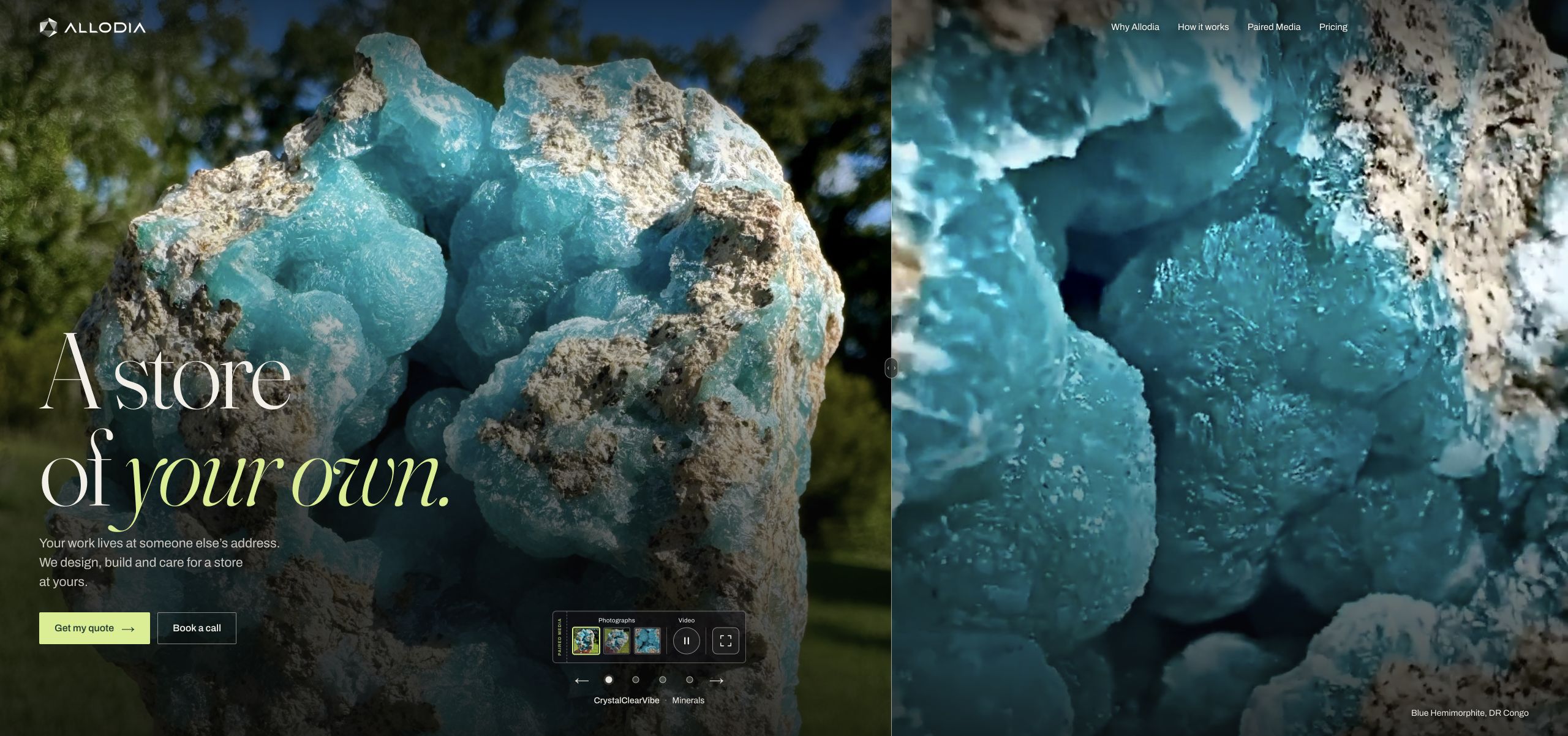
I shaped a managed commerce offering around a practical question: how can a seller gain a store of their own without taking on another technical job?
01 / The problem
Start with the work people need to do.
A seller’s catalog, brand and customer relationships can become subordinate to the marketplace where they sell. Moving to an independent store introduces a second problem: design, setup, hosting and maintenance become the seller’s responsibility. I defined Allodia around both problems, combining a seller-owned destination with ongoing care.
- 01 / Show the businessStart with an existing shop or an idea, then agree on scope and price.
- 02 / Review the storeMake the proposition tangible through storefront previews and a review before launch.
- 03 / Sell with ongoing careKeep hosting, security, updates and backups within a managed service.
02 / Design decisions
The choices behind the interface.
Make ownership precise
I chose a quoted build plus managed care, making the ongoing work explicit instead of treating store ownership as the end of the service. Standard store portability and the proprietary Paired Media service have different boundaries. I made those distinctions part of the product definition so the ownership story could be explained accurately.
Pair the detail with the whole
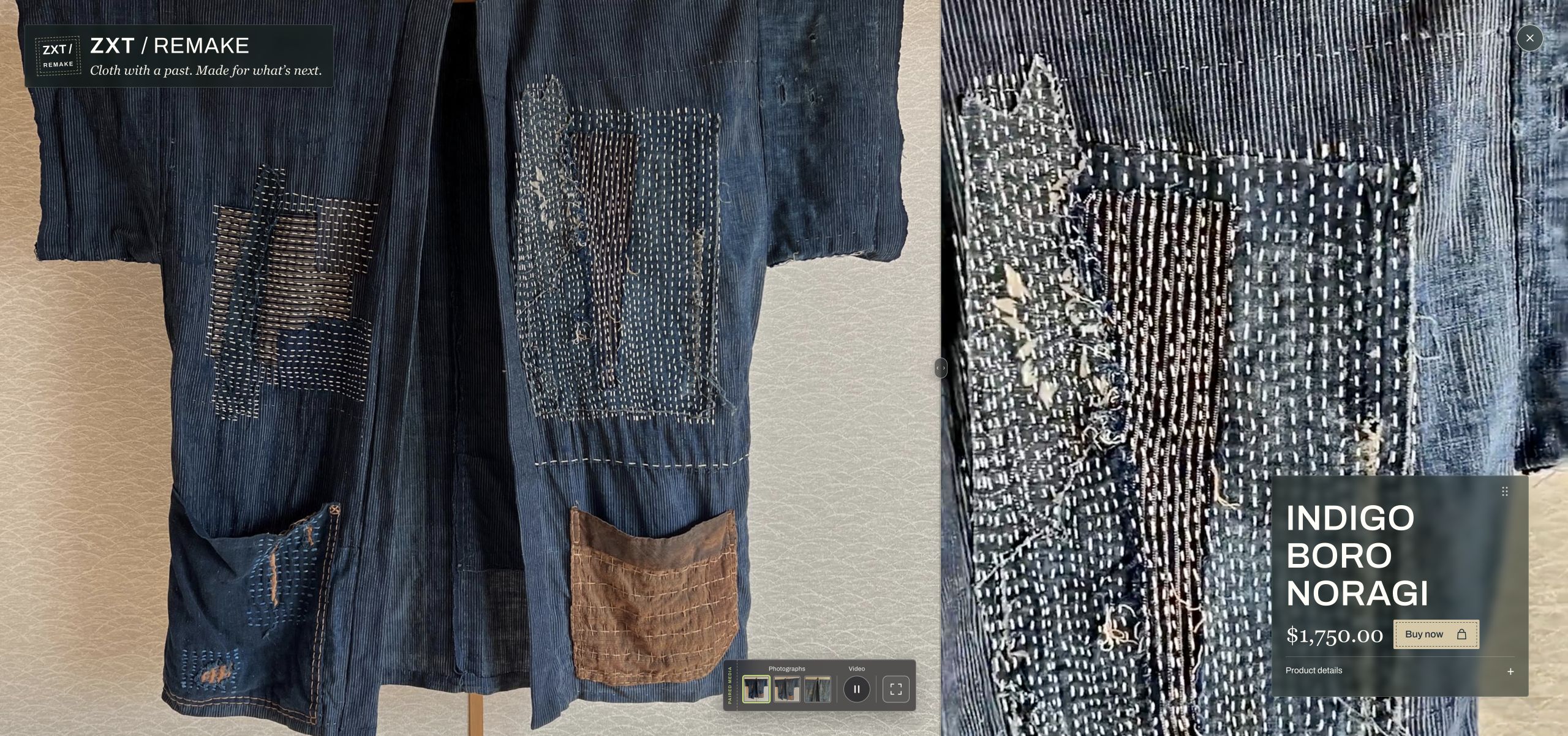
A product photograph provides composition and detail; motion reveals texture, movement and changing light. Paired Media places them in one view, with explicit photograph selection, video controls and fullscreen inspection. The design gives buyers control of the comparison instead of asking them to infer it from separate gallery items.
Show the service before asking for commitment
The site separates the quote request from payment and offers multiple storefront looks. This makes the proposed service concrete before a seller commits. The concepts use real product media with attribution and are labeled as previews.
03 / Evolution
How the direction became more specific.
The documented direction moved from a broad ownership promise to an explicit managed-service model. The October presentation work paired real product photography and video, then refined photograph selection, fullscreen controls and responsive proportions. The central decision remained consistent: make the seller’s product and identity the focus while explaining who handles the work.
04 / Outcome
What exists, and what I would measure next.
The public site now explains the service, presents interactive store concepts and exposes quote and call entry points. Paired Media is demonstrated in the presentation. This case does not claim production merchant adoption, a conversion lift, completed store-export validation or a fully delivered backend service.
I would measure quote starts and completions, then observe whether sellers can explain the build-and-care model and what remains theirs if they leave. For buyers, the next test is whether paired media helps answer concrete product questions before purchase.
About this case study
Written from retained project decisions and interface evidence, reviewed October 24, 2026. The screenshots are actual captures; prototype and demonstration states are labeled. The outcomes section distinguishes current implementation from future validation.